


Trump’s Monroe Doctrine 2.0 Targets LATAM Assets
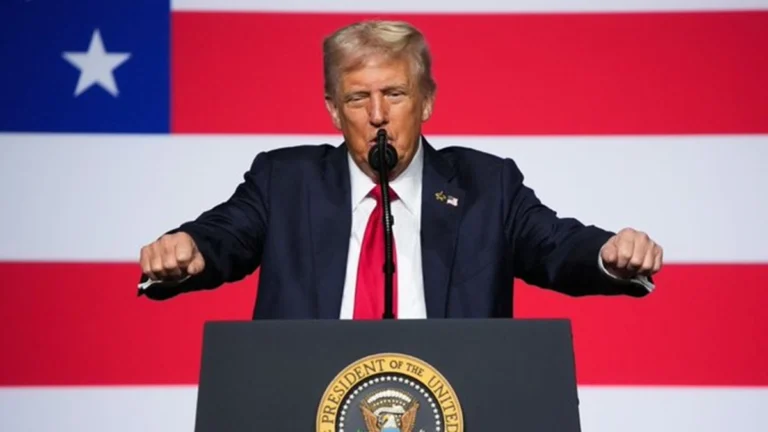
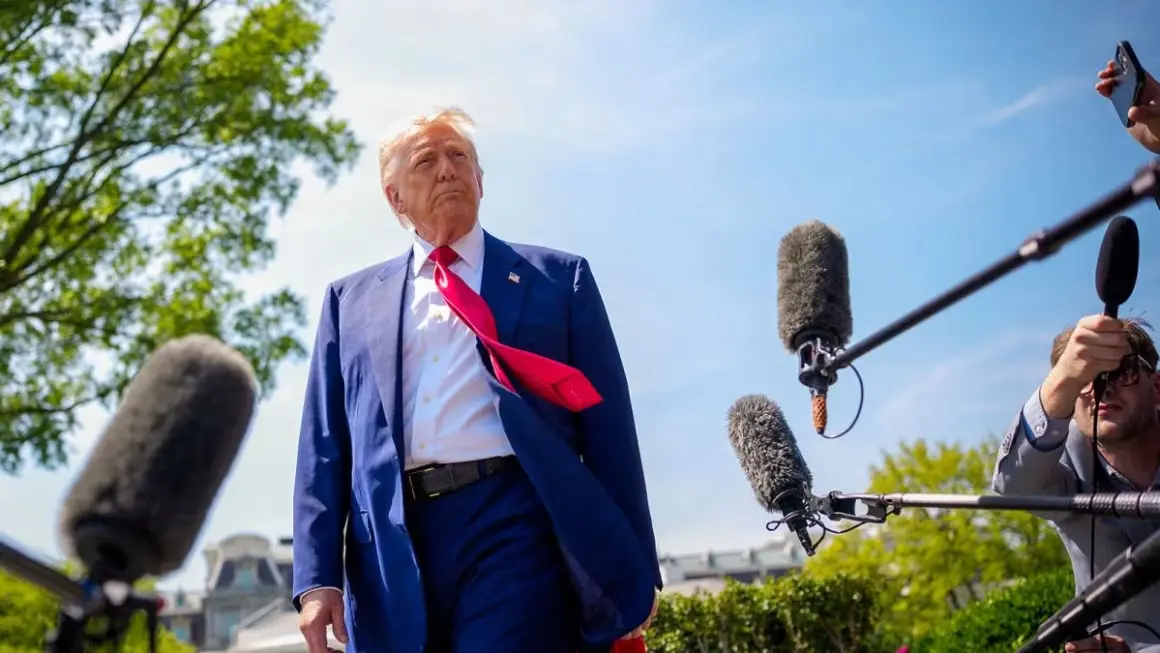
U.S. President Donald Trump. X/ @bozon_higs
December 5, 2025 Hour: 2:10 pm
🔗 Comparte este artículo
It proposes guaranteeing U.S. access to ‘key geographies throughout the region.’
On Friday, the White House released the 2025 National Security Strategy (NSS), a document showing that President Donald Trump aims to restore the 1823 Monroe Doctrine to cement the United States as the leading power in the Americas.
RELATED:
Trump to Bolster U.S. Military Power in the Indo-Pacific
“After years of neglect, the U.S. will reassert and enforce the Monroe Doctrine to restore American preeminence in the Western Hemisphere, and to protect our homeland and our access to key geographies throughout the region. We will deny non-Hemispheric competitors the ability to position forces or other threatening capabilities, or to own or control strategically vital assets, in our Hemisphere. This ‘Trump Corollary’ to the Monroe Doctrine is a common-sense and potent restoration of American power and priorities, consistent with American security interests,” the 2025 NSS states.
This new strategic vision seeks to block foreign powers from intervening in the affairs of the Western Hemisphere and, in this new phase, will focus on “recruiting” or “incorporating” allies aligned with the U.S. government and “expanding” its influence throughout the region.
It is a stricter application of the policy introduced by former President James Monroe (1817–1825) to regain U.S. primacy in the hemisphere and protect both its territory and access to areas considered strategic in the region.
Washington will seek to prevent outside powers from deploying forces, military resources or acquiring critical assets in the Americas, arguing that such moves pose a national security risk.
Against Migration and Drug Trafficking
Under the premise of “incorporating,” the Trump administration expects to work with established allied countries in the region to curb irregular migration, stop drug flows and reinforce stability both on land and at sea.
These are governments capable of contributing to tolerable stability, even beyond their own borders. Such nations would play a key role in containing irregular migration, combating cartels, relocating supply chains and strengthening local economies.
The proposal says the United States will reward governments and political parties that share its strategic vision. But it also emphasizes that Washington is willing to work with others that, while holding different perspectives, maintain common interests with the United States.
Trump’s new strategy also calls for reassessing U.S. military presence on the continent and reducing deployments in areas whose importance has diminished. At the same time, it seeks to reinforce the presence of the Coast Guard and the Navy to control maritime routes, curb irregular sea migration and limit human and drug trafficking.
The 2025 NSS also envisions targeted deployments to secure the border and combat cartels, including the use of lethal force when necessary, as well as establishing or expanding access points in locations deemed strategic.
Regarding “expanding,” the strategy seeks to broaden Washington’s network of partners and consolidate its position as the leading economic and security ally of the Americas.
Adversarial Governments
Trump’s 2025 NSS highlights the importance of drawing in countries with which the United States has less close ties and deterring them from seeking cooperation with external actors.
“Some foreign influences will be difficult to reverse due to political alignments between certain Latin American governments and certain external actors. However, many governments are not ideologically aligned with those powers but do business with them for reasons such as lower costs or fewer regulations,” it states.
It stresses that external actors have increased their presence in Latin America through projects that could harm U.S. economic interests and present future strategic risks.
The document argues that allowing such expansion has been a “grave mistake” and asserts that U.S. primacy in the region is a necessary condition for its security and prosperity.
It acknowledges that in some countries foreign influence will be difficult to reverse due to political affinities, but argues that in other cases the reasons are economic, such as lower costs or lighter regulations.
The 2025 NSS says Washington has had success explaining the hidden costs of these external offers, including espionage risks, cybersecurity vulnerabilities and debt burdens.
The Economic and Arms Landscape
On international economic policy, the 2025 NSS proposes using tariffs and reciprocal trade agreements to strengthen the U.S. economy and those of its hemispheric allies.
Simultaneously, Washington hopes Latin American countries will strengthen their domestic economies and become more attractive markets for U.S. investment.
The strategy also underscores the need to reinforce hemispheric supply chains to reduce external dependencies and boost economic resilience. At the same time, it calls for deepening security partnerships through arms sales, intelligence sharing and joint exercises.
teleSUR/ JF
Sources: White House – EFE